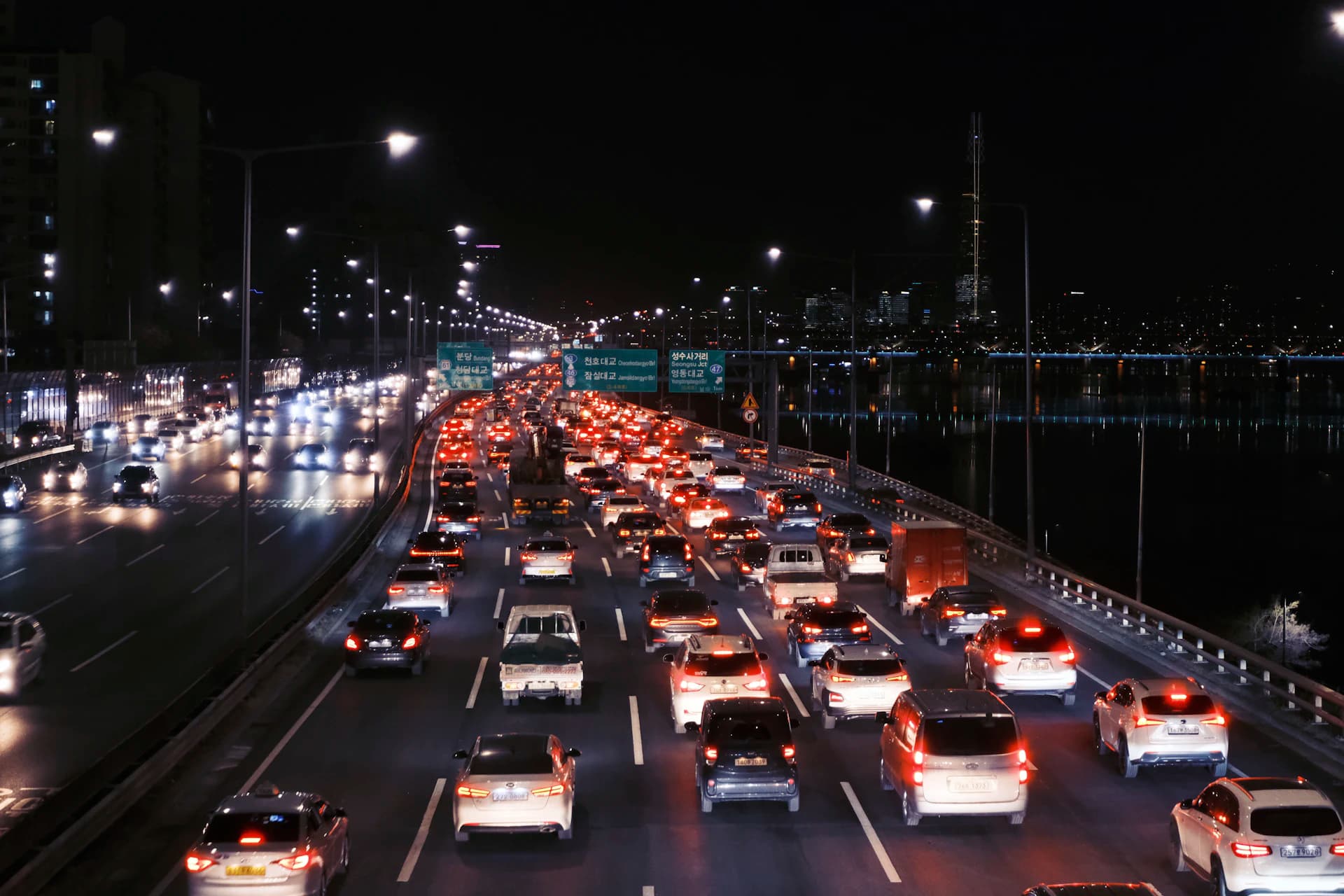
We readily file it among the minor irritations of daily life: the drone of a motorway, a passing scooter, the roar of a jet overhead. Noise annoys, tires, breaks concentration. But reducing it to a mere nuisance means underestimating what it does, silently, to the body. A growing body of science now ranks noise pollution among the genuine cardiovascular risk factors, alongside high blood pressure and smoking — with the difference that we almost never pay it any mind.
Europe's second environmental pollutant
The World Health Organization considers environmental noise the second-largest environmental cause of ill health on the continent, just behind air pollution. This is not a figure of speech; it rests on hard numbers. According to the European Environment Agency's Environmental Noise in Europe 2025 report, relayed in 2026 by the European Heart Journal, chronic exposure to transport noise was associated, in 2021 alone, with roughly 66,000 premature deaths, 50,000 new cases of cardiovascular disease and 22,000 cases of type 2 diabetes across Europe.
In total, the agency estimates that this exposure costs more than 1.3 million healthy life-years every year. And the scale is enormous: at least 112 million Europeans live exposed to transport noise above the 55-decibel threshold set by the European directive. Noise, then, is not a marginal problem confined to a few airport neighbors, but a reality that touches a large share of the urban population.
How sound reaches the heart
The link may seem surprising: by what mechanism would a sound wave act on the arteries? The answer lies in how our body interprets noise. Even when we pay it no attention — and above all while we sleep — the auditory system stays on alert. A sudden noise is processed by the brain as a signal of potential threat, which triggers a stress response.
That response activates the hypothalamic-pituitary-adrenal axis and the release of hormones such as cortisol and adrenaline. The result: a faster heartbeat, rising blood pressure, vasoconstriction, and over time a low-grade inflammation and oxidative stress that weaken the vessel walls. Repeated night after night, year after year, this micro-assault leaves its mark.
Epidemiological data confirm the logic. A dose-response meta-analysis published in 2023 in the Journal of Urban Health estimated that, for every 10-decibel increase in road traffic noise, the overall risk of cardiovascular disease rises by about 2%, the risk of stroke by 3.4% and the risk of heart failure by 5%. Modest percentages for one individual, yet considerable when applied to tens of millions of permanently exposed people.

Night, the most vulnerable hours
It is during sleep that noise does the most damage, precisely because we do not notice it. You can believe yourself deeply asleep while the steady passage of trucks fragments your sleep cycles and keeps your body under tension. The sleeper remembers nothing on waking, but the cardiovascular system has been working all night.
A particularly telling study, led by Dr. Omar Hahad's team at the University of Mainz and published in early 2026 in Cardiovascular Research, demonstrated this experimentally. Seventy-four healthy adults slept three nights under different conditions: with no noise, with 30 episodes of road traffic noise, or with 60 episodes, at roughly 60 decibels. After the noisy nights, the participants' blood vessel function had clearly deteriorated — flow-mediated dilation falling from 9.35% to 7.73% — while their heart rate rose on average by more than one beat per minute and their sleep quality dropped across every dimension.
"Even a single night of road traffic noise stressed the cardiovascular system," Dr. Hahad summarizes.
This result highlights a crucial point: you do not need to endure an extreme din to be affected. A sound level many would consider tolerable is enough to leave a measurable imprint on the heart and vessels in a single night.
How many decibels is too many?
To put the danger in perspective, in 2018 the WHO published its Environmental Noise Guidelines for the European Region. It recommends keeping road traffic noise below 53 decibels over the full day, and above all below 45 decibels at night, the threshold beyond which harmful health effects become significant.
A few reference points help picture these values. A normal conversation sits around 60 decibels; a busy street ranges between 70 and 80 decibels; an accelerating motorbike can exceed 90 decibels. In other words, the recommended nighttime threshold of 45 decibels is easily crossed in most homes facing a busy road. Because the decibel scale is logarithmic, each additional 10 decibels corresponds to a sound perceived as roughly twice as loud — and, as we have seen, to a measurably higher cardiovascular risk.

Reducing your exposure, what remains in your hands
Faced with a risk largely dictated by urban planning and traffic, it is easy to feel powerless. Yet several concrete levers exist at the individual level, especially to protect sleep, the most sensitive link:
- Rethink the bedroom: where possible, set up the sleeping area on the quietest side of the home, away from the street.
- Insulate: acoustic double glazing or simple earplugs can lower nighttime exposure by several decibels.
- Mask: a constant, neutral background sound, such as a fan or white noise, softens the contrast of the peaks that jolt the body awake.
- Seek quiet: spending regular time in silent green spaces gives the nervous system genuine windows of recovery.
- Watch personal volume: noise does not come only from outside; earphones pushed too loud add their own dose of exposure.
The catch is knowing whether your environment is actually weighing on your body. This is where tracking your own data comes into its own. A resting heart rate that stays elevated, a flagging heart rate variability, or a consistently broken night can betray an invisible sonic assault. Cross-referencing these signals, rather than reading them in isolation, lets you link an environmental cause to an effect on the body. That is precisely the approach championed by Kantise: bringing together your sleep, heart and wellbeing indicators to turn scattered numbers into useful observations. More science-based analyses await in our blog, and a full overview of the approach on the homepage.
Noise has long been seen as the inevitable price of modern life. Science now invites us to view it differently: as a quiet but very real risk factor, and above all a largely modifiable one. The first step is simply to stop ignoring it.
FAQ
Can noise really harm the heart?
Yes. Chronic noise triggers a stress response that raises blood pressure and promotes inflammation of the vessels. The WHO ranks it as the second environmental cause of disease in Europe, after air pollution.
At what noise level does the risk begin?
The WHO recommends staying below 53 decibels of road traffic noise over the day and below 45 decibels at night. For comparison, a busy street reaches 70 to 80 decibels, well beyond those thresholds.
Is nighttime noise more dangerous?
Yes, because it disrupts sleep without necessarily waking you. A 2026 study showed that a single night of road traffic noise was enough to impair blood vessel function and raise the heart rate of healthy participants.
Can you really get used to noise?
You get used to consciously perceiving noise, but not to its physiological effects. The body keeps reacting to every sound peak, especially during sleep, even when the mind retains no memory of it.
How can you reduce your exposure to noise?
Placing the bedroom on the quiet side of the home, using double glazing or earplugs, masking peaks with a neutral background sound, and taking time in silent green spaces are all effective ways to protect both sleep and the heart.