
Among the leading wellness trends of 2026, the return to nature holds pride of place: forest bathing, "green micro-breaks," outdoor retreats. Behind the fashion lies a simple question that deserves a precise answer: how much time do you actually need to spend outdoors, in a natural setting, to gain a measurable benefit for your health and mood? Researchers have tackled the question, and their conclusions are both encouraging and nuanced.
The two-hours-a-week rule
The most-cited study on the topic is crystal clear in its title. In 2019, a team at the University of Exeter published in Scientific Reports an analysis of 19,806 adults in England. The finding: people who spend at least 120 minutes a week in contact with nature are markedly more likely to report good health and high psychological wellbeing than those who never do.
The most instructive detail is the threshold. Below 120 minutes a week, the effect is statistically indistinguishable from zero: those who spent between 1 and 119 minutes in nature were no better off than those who spent none at all. The benefit appears only once the two-hour bar is cleared. At the other end, the association peaks between 200 and 300 minutes a week, with no further gain beyond that. There is no need, then, to aim for whole days in the forest: the useful range is modest and accessible.
Another reassuring lesson: it does not matter how you spread that time out. Whether you bank your two hours in a single long Sunday outing or in small daily doses, the result is the same. And it is not about spectacular landscapes: most of the visits recorded took place within two miles of home, in urban parks, woodlands, or by the sea. The threshold also held equally for men and women, younger and older adults, wealthy and deprived neighborhoods, and even among people living with chronic illness or disability.

Why the body relaxes among the green
Beyond self-reported wellbeing, measurable physiological markers shift on contact with nature. The most studied is cortisol, the main stress hormone. A systematic review and meta-analysis published in 2019 in the International Journal of Biometeorology pooled eight studies comparing groups exposed to forests with groups in urban settings. Salivary cortisol was significantly lower in the "forest" groups, both before and after the intervention.
This result converges with other work. A 2022 meta-analysis on forest therapy in city dwellers observed a drop in blood pressure and salivary cortisol after exposure to a forest environment. The leading hypothesis ties together several mechanisms: reduced activity of the sympathetic nervous system (the "alert" system), relief for the attention constantly taxed by urban surroundings, and the simple effect of gentle walking and natural light.
The authors of these syntheses remain cautious, however. The magnitudes are modest, the number of studies limited, and the protocols hard to run blind: you cannot hide from a participant that they are standing in a forest. Part of the effect could therefore stem from positive expectation — in other words, a placebo effect. That is an important caveat for keeping our feet on the ground.
What the science does not promise
Nature is no miracle cure, and not every study points the same way. An analysis published in 2021 in the Journal of Epidemiology and Community Health, covering 16,189 middle-aged and older adults across four European cohorts, found no association between proximity to green space and depression. How do we reconcile this with the findings above?
The key lies in a simple but crucial distinction: living near a park is not the same as visiting that park. Studies that measure the time actually spent outdoors find effects; those that merely measure distance from home find far fewer. It is behavior — going out, walking, exposing yourself — that matters, not the mere presence of a patch of green on the map.
It also bears repeating that most of this work is observational: it establishes correlations, not cause and effect. Healthier people may simply be more inclined to go outside, rather than the other way around. Scientific caution therefore invites us to present contact with nature as a habit associated with wellbeing — promising and risk-free — rather than as a proven remedy.
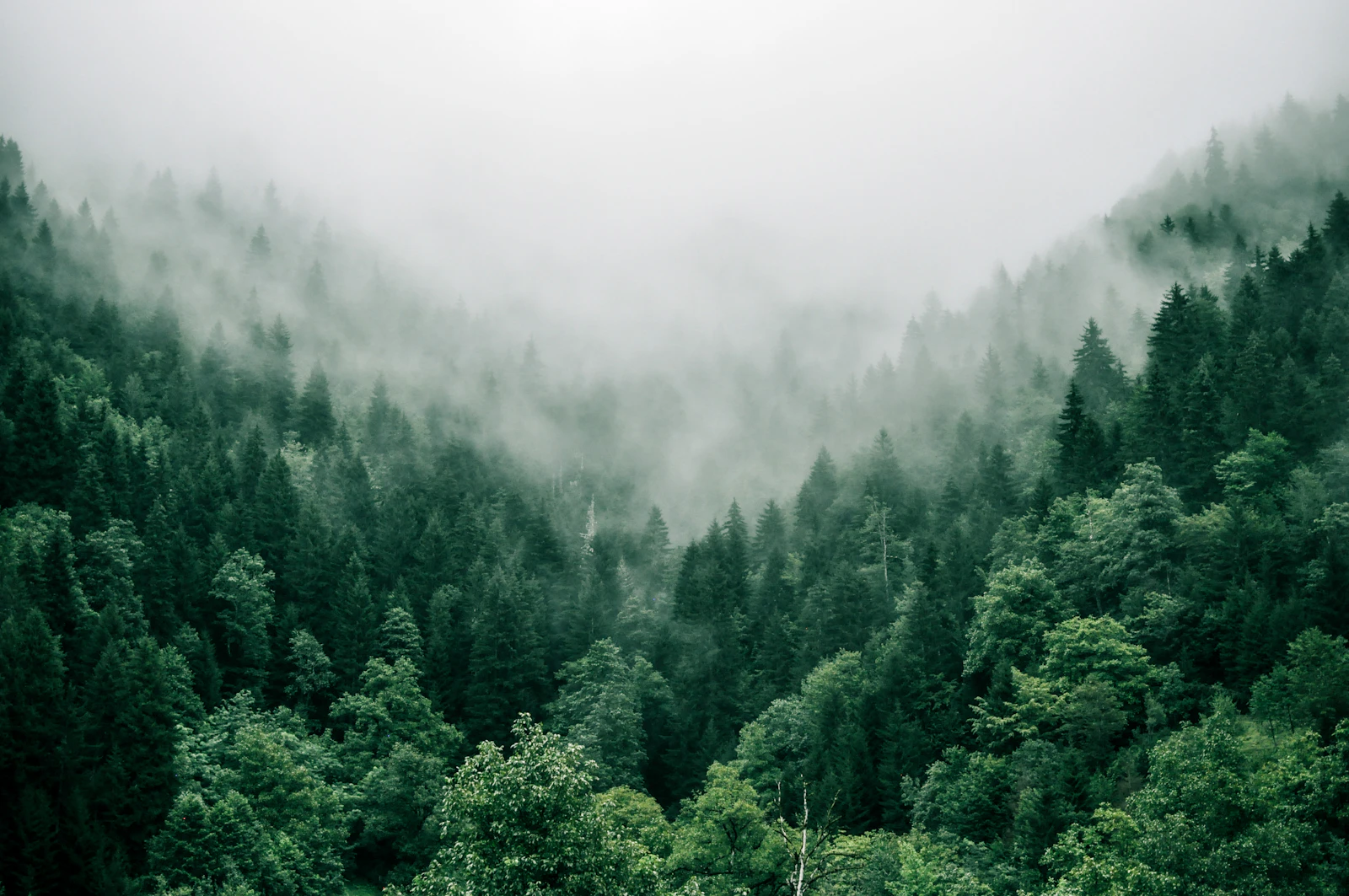
How to reach your "dose" of nature
The good news is that the target is easy to hit. Two hours a week — a little under twenty minutes a day — is enough to clear the threshold identified by research. Here are a few concrete ideas:
- Break it up, guilt-free. A twenty-minute walk through a park on your way to work, or three half-hour outings over the weekend: both work.
- Bet on proximity. A square, a riverbank, or a tree-lined street near you beats a distant forest you will never visit. Accessibility trumps grandeur.
- Pair it with something already planned. Lunch outside, a phone call taken while strolling through a garden, a run in a green space rather than on a treadmill: the dose adds up with no extra effort.
- Watch what works for you. The felt effect varies from person to person. Logging your time outdoors and your mood over a few weeks helps you see whether the link holds in your own case.
That last point connects to a broader philosophy of tracking your habits. Cross-referencing time spent outdoors with your sleep, activity, or mood data lets you tell what genuinely makes a difference for you from mere belief. That is precisely the approach offered by Kantise: bringing together your various life data to spot your own levers of wellbeing. You will find more science-based analyses in our blog, and a full overview of the approach on the homepage.
In short, science does not prescribe nature like a pill, but it sketches a coherent and cheering message: a little regular green, within walking distance, goes hand in hand with a better sense of health and calmer physiological stress. Two hours a week: a reasonable, free goal that most of us can reach without upending our schedule.
FAQ
How much time should you spend in nature each week?
The landmark Exeter study puts the threshold at 120 minutes — two hours — a week. Below that, no measurable benefit appears; the maximum is reached between 200 and 300 minutes, with no gain beyond.
Does it have to be done all at once?
No. The study shows that spreading the two hours over several short outings produces the same effect as one long visit. Consistency matters more than the length of any single session.
Is an urban park as effective as a forest?
In the Exeter study, most visits took place within two miles of home — in parks, woods, or by the sea. Accessibility and frequency matter more than how spectacular the place is.
Does nature really reduce stress?
Several meta-analyses observe a drop in salivary cortisol and blood pressure after exposure to a forest environment. The effects are real but modest, and the authors stress that positive expectation may contribute to them.
Why do some studies find no effect?
Studies that measure only the distance to a green space often find little effect, because living near a park does not mean visiting it. What seems to count is the time actually spent outdoors, not mere proximity.