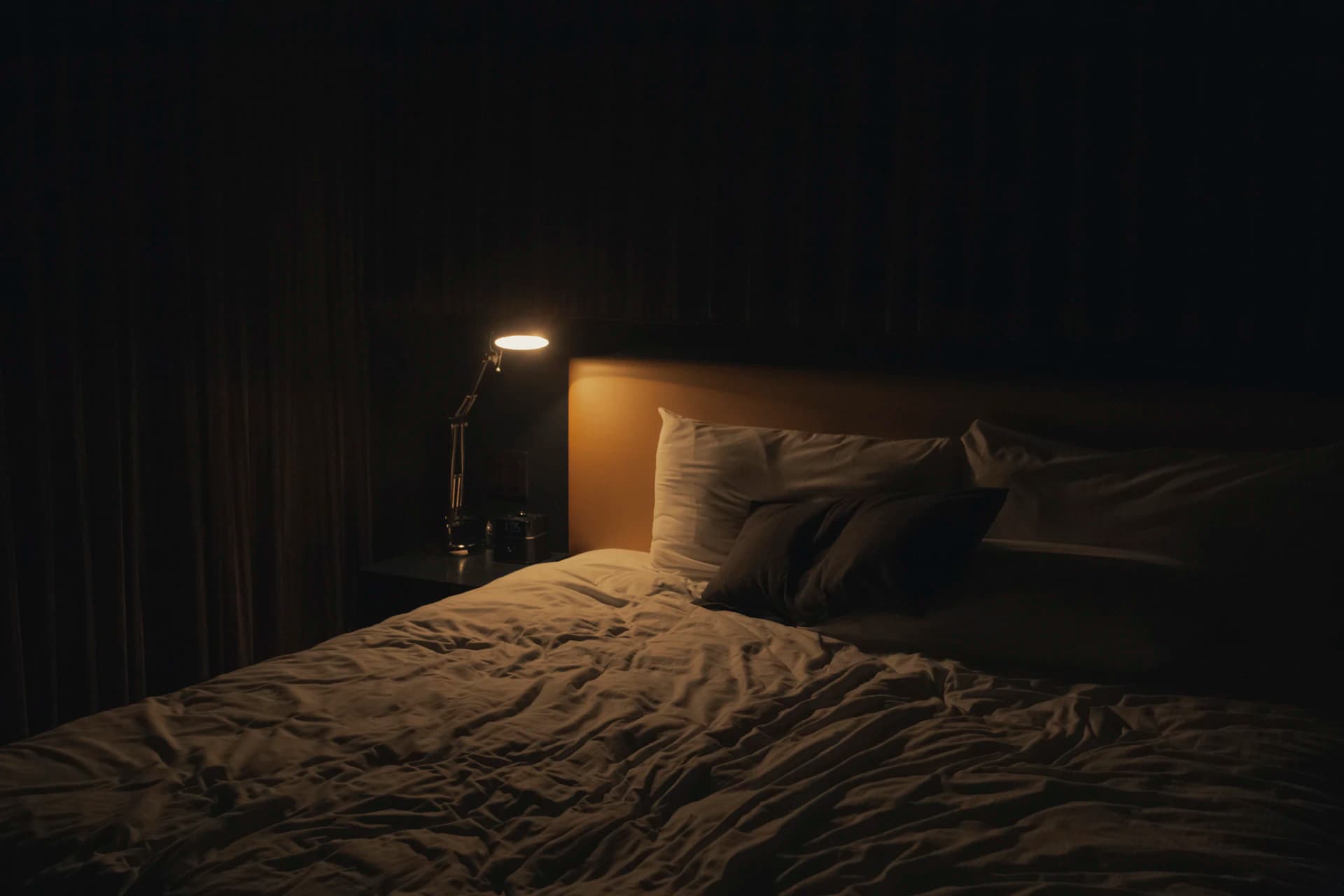
It's hard to open a wellness app or walk past a pharmacy shelf without running into it: magnesium has become the star sleep supplement. On social media, millions of videos sell the evening glass of bisglycinate as the key to drifting off peacefully. But behind the hype, what do the clinical trials actually show? The answer is more nuanced than the marketing: an effect exists, but it is modest, depends on your starting point, and is no substitute for good sleep habits. Let's sort it out.
Why is magnesium linked to sleep?
Magnesium is not a sedative. It is a mineral involved in more than three hundred enzymatic reactions in the body, from energy production to muscle function. On the nervous system, its role is twofold, and that is what interests researchers: it acts as an agonist of GABA receptors — the brain's main inhibitory neurotransmitter, the one that calms neuronal excitability — and as an antagonist of NMDA receptors, which drive neuronal activation. In theory, this dual effect favors a relaxed state conducive to sleep and supports the architecture of deep slow-wave sleep, the most restorative phase.
So much for the plausible mechanism. But a mechanism that looks elegant on paper does not guarantee a measurable effect in humans. That is precisely what controlled trials set out to verify.
A real and widespread shortfall
The starting argument of magnesium's advocates holds up: many of us fall short. Globally, an analysis published in 2025 estimates that nearly a third of the population — roughly 2.4 billion people — fails to meet recommended magnesium intakes. In the United States, more than half of adults consume less than the estimated average requirement. Recommended intakes sit around 420 mg per day for men and 320 mg for women — thresholds that a modern diet rich in refined products often struggles to meet.
And a magnesium shortfall is, observationally, associated with poorer sleep quality. That correlation launched the hypothesis: if a deficit harms sleep, could supplementation improve it? The logic is tempting, but correlation is not causation, and this is where trials come in.

What the recent trials show
The strongest study to date appeared in 2025 in Nature and Science of Sleep, by Schuster and colleagues. This randomized, placebo-controlled trial followed 155 adults reporting poor sleep, split between a group receiving 250 mg of elemental magnesium as bisglycinate per day and a placebo group, over four weeks. The primary outcome was the Insomnia Severity Index (ISI).
The verdict is instructive. Magnesium did beat placebo: an ISI drop of 3.9 points versus 2.3 points, a statistically significant difference (p = 0.049). But the effect size was small. In concrete terms, 34% of participants on magnesium saw a clinically meaningful improvement, compared with 20% on placebo. A genuine benefit, then, appearing within the first two weeks — but far from a miracle cure: a substantial share of the felt improvement comes down to the placebo effect, which is powerful where sleep is concerned.
In older adults: modest and fragile evidence
The groups most likely to be short on magnesium — older adults among them — are also the most studied. A systematic review with meta-analysis published in 2021 pooled three randomized trials covering 151 older adults. The result: magnesium cut time to fall asleep by about 17 minutes compared with placebo. Total sleep time rose by an average of 16 minutes, but without reaching statistical significance.
The authors are the first to temper these figures: the trials were small and carried a moderate-to-high risk of bias, so the overall quality of evidence is judged low to very low. Their conclusion is honest — the current literature remains too thin for doctors to firmly recommend magnesium for insomnia. The same review nonetheless notes a signal from the diet side: in the Jiangsu Nutrition Study, which followed 1,487 adults over five years, a higher dietary magnesium intake was associated with less daytime sleepiness in women.
The question of form: not all are equal
"I took magnesium and nothing happened" — the chemical form of the supplement may be partly to blame. Magnesium oxide, the cheapest and most common, is poorly absorbed. Chelated forms such as bisglycinate — the one in the 2025 trial — are better absorbed and generally easier on the gut.
Another form, magnesium L-threonate, has drawn attention for its supposed ability to cross the blood-brain barrier more readily. A 2024 randomized trial published in Sleep Medicine: X tested 1 g per day of this form in 80 adults aged 35 to 55 over three weeks, with objective tracking by an Oura ring. Participants saw gains in their deep- and REM-sleep scores, as well as in their energy and mood on waking. Encouraging results, but to be taken with caution: the sample was small, the duration short, and this kind of study calls for confirmation by larger, independent trials.

So, should you take it?
An honest synthesis of this work comes down to a few principles:
- Food first. Leafy greens, legumes, nuts, seeds, whole grains, and dark chocolate are excellent sources. Closing a gap through your plate is the most firmly supported move.
- A supplement can help, modestly. If your sleep is disturbed and your intake is low, a well-absorbed form (bisglycinate) at a reasonable dose is a low-risk trial. Don't expect a dramatic effect.
- Respect the ceiling. The safety limit for magnesium from supplements is set at 350 mg per day; beyond that, the main side effect is digestive (a laxative effect). If you have kidney disease or are on medication, seek medical advice.
- It is not a substitute. No mineral makes up for erratic schedules, late screens, or an overheated bedroom. Magnesium works at the margin, not in place of the fundamentals.
Perhaps the most important point is this: the response to magnesium varies from one person to the next. The only way to know whether it truly changes anything for you is to observe your sleep before and after, over several weeks, keeping everything else constant. That is the personal-tracking logic championed by Kantise: cross-referencing your sleep data, your habits, and your experiments to tell what actually works from what is merely a trend. You will find more science-based analyses in our blog, and a full overview of the approach on the homepage.
FAQ
Does magnesium really help you sleep?
Modestly. Recent trials show a real but small effect: a greater drop in insomnia severity than placebo, and time to fall asleep shortened by about 17 minutes in older adults. The quality of the evidence remains limited, however.
Which form of magnesium is best for sleep?
Magnesium oxide is poorly absorbed. Chelated forms such as bisglycinate, used in the 2025 trial, are better absorbed and gentler on the gut. L-threonate is the subject of promising but still preliminary research.
How much magnesium is safe?
The safety limit for magnesium from supplements is 350 mg per day. Beyond that, the main side effect is digestive (a laxative effect). Magnesium from food is not subject to this ceiling.
Should I rely on food or supplements?
Food first. Leafy greens, legumes, nuts, seeds, and whole grains cover most needs. A supplement is mainly justified if your intake is low and your sleep is disturbed.
Does magnesium replace good sleep hygiene?
No. Magnesium works at the margin. Regular schedules, a cool dark bedroom, and limiting screens at night have a far greater impact. A supplement complements these fundamentals — it never replaces them.