What if your heart told you every morning whether you're ready to push hard or need to ease off? That's not science fiction — it's exactly what heart rate variability (HRV) makes possible. And yet most athletes still follow fixed training schedules, ignoring the signals their bodies send every single second.
You're Following a Schedule, Not Your Body
You have your training plan. Tuesday, interval session. Thursday, long run. Sunday, active recovery. That structure feels reassuring. But your body hasn't read the plan. A restless night, intense work stress, mild dehydration — these all shift your actual physiological state in ways your training calendar never accounts for.
The result? You sometimes train too hard when already depleted, and not hard enough when you're at peak readiness. Performance gains are suboptimal, and the risk of injury or overtraining builds quietly in the background.
HRV is the tool that breaks this blind cycle by giving you an objective daily indicator of your recovery state — tailored to you, not to a generic average.
What Is HRV, Exactly?
Your heart doesn't beat like a perfect metronome. The interval between each beat varies slightly — sometimes by just a few milliseconds. That variation is heart rate variability. It reflects the balance between the sympathetic nervous system (alertness, stress, exertion) and the parasympathetic nervous system (rest and recovery).
When your HRV is high, parasympathetic activity dominates: your body is rested and ready to absorb intense training. When it's low, the sympathetic system is in charge: your body is under strain, still recovering from effort or stress. Pushing hard in that state is a fast track to overtraining.
The most scientifically validated HRV metric is RMSSD (Root Mean Square of Successive Differences) — a measure of beat-to-beat fluctuations directly linked to parasympathetic activity. It's the metric used by the vast majority of apps and wearables today.
What the Science Says
The evidence for HRV-guided training has grown substantially in recent years. A systematic review and meta-analysis published in the International Journal of Environmental Research and Public Health (Granero-Gallegos et al., 2020) analyzed six randomized controlled trials covering 195 athletes. HRV-guided training produced significantly greater VO2max improvements (effect size = 0.40) compared to traditional fixed programs (effect size = 0.21). The advantage was most pronounced for amateur athletes and women.
A narrative review published in Sensors in December 2025 (Esco et al.) confirmed that daily morning RMSSD measurements via mobile device or wearable represent a practical, reliable method for tracking training adaptation. Weekly-averaged RMSSD values correlated strongly with running performance improvements (r = 0.72–0.76) — far stronger than isolated single-day readings (r = -0.06 to -0.17). The implication: trends matter more than any individual reading.
A bibliometric analysis of 1,660 scientific articles (2010–2025) in Frontiers in Sports and Active Living maps the rapid expansion of HRV research in sport science, pointing to sleep integration, machine learning, and deeper personalization as the dominant future directions.
How to Measure Your HRV Every Day
The good news: you don't need a lab. A simple, consistent morning protocol is all it takes:
- Measure upon waking, before getting up, eating, or drinking coffee.
- Sit or lie quietly, allow one minute of stabilization before recording.
- Duration: 1–2 minutes is sufficient for a reliable RMSSD reading.
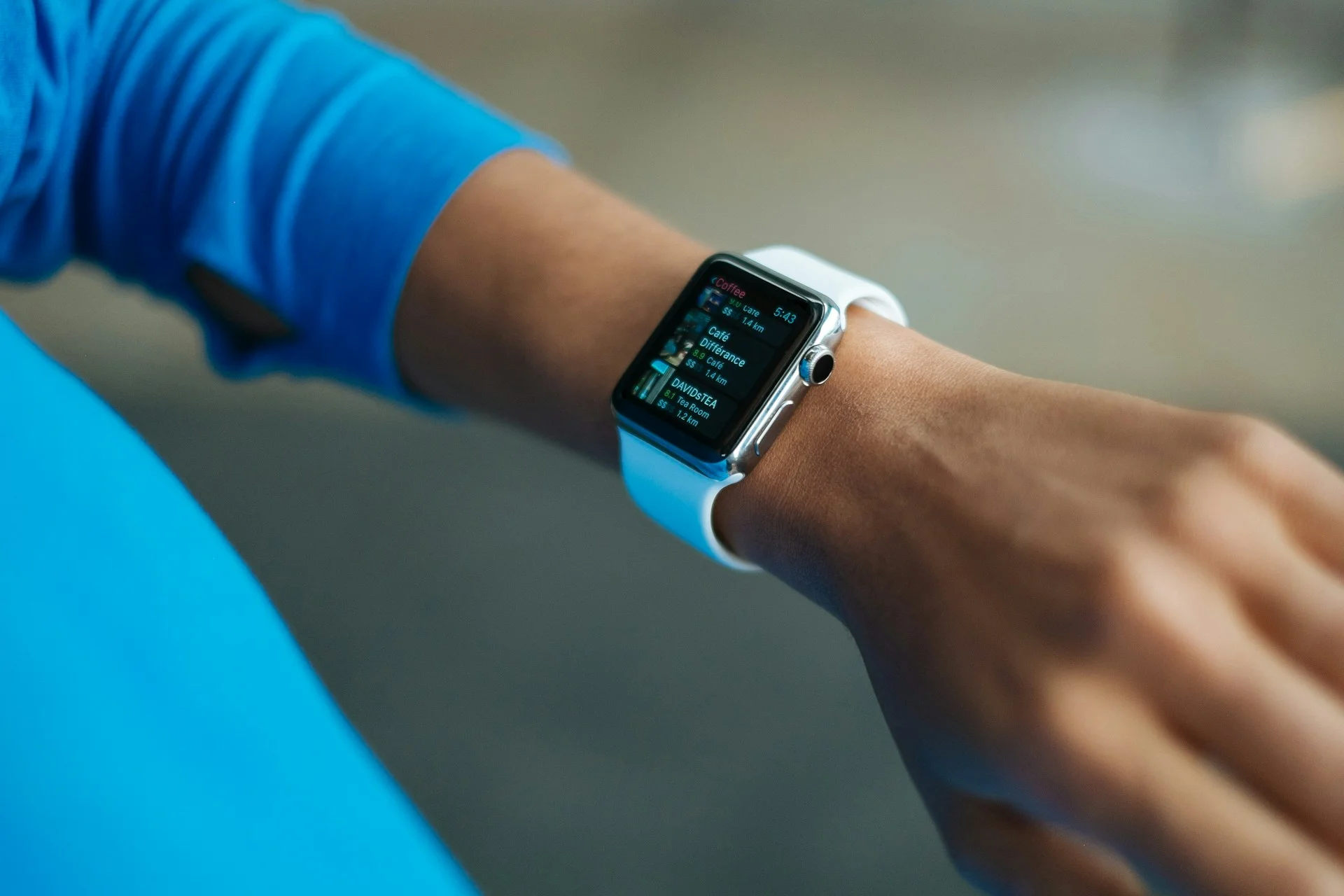
- Device: a chest strap (Polar, Garmin), smartwatch (Apple Watch, Garmin, WHOOP), smart ring (Oura Ring), or a smartphone app using your phone camera or a finger sensor.
What matters most isn't the absolute precision of your device — it's the consistency of your protocol. The trend over days and weeks is what provides actionable insight, not any single reading in isolation. Research recommends a minimum of 3–5 readings per week to approximate the reliability of daily tracking.
Interpreting Your Data: The Traffic Light Principle
Once you have your reading, how do you use it? The core framework breaks down into three levels:
- HRV at or above your normal range (green light): high-intensity training is appropriate — intervals, heavy lifting, competition.
- HRV slightly below your normal range (yellow light): opt for moderate effort — base endurance, mobility work, technique sessions without maximal intensity.
- HRV significantly below normal (red light): prioritize rest and recovery. Training hard today will set you back rather than move you forward.
Your "normal range" is entirely personal and built from your own data over 4–8 weeks. Comparing your HRV to someone else's, or to a generic population average, is meaningless — the reference point that matters is your own baseline.
A Sample HRV-Guided Week in Practice
To make this concrete, here's what an HRV-guided training week might look like for an amateur runner:
- Monday (HRV high): Interval session — 6 x 800m at race pace. Body is ready, capitalize on it.
- Tuesday (HRV normal): Easy 50-minute aerobic run at a conversational pace.
- Wednesday (HRV low — rough night): 20 minutes of brisk walking and stretching. The plan called for hill repeats, but the data says otherwise.
- Thursday (HRV returned to normal): Moderate strength session — core work and hamstring focus.
- Friday (HRV slightly above normal): 80-minute long run at a comfortable effort.
- Saturday (HRV normal): Technical session — running drills and stride work.
- Sunday (HRV high): Spontaneous decision to add a light swim, capitalizing on an unexpectedly good recovery state.
What this week reveals: Wednesday's dip was traceable to two known factors — a late evening meeting and a heavier meal the night before. The HRV captured that stress before the runner felt consciously fatigued. By skipping the hill session, he avoided unnecessary overload and arrived at Friday's long run with noticeably better energy. That is exactly the adjustment HRV-guided training enables: not doing less, but doing the right things at the right moments.
Weekly trends matter just as much as daily readings. A consistently rising weekly RMSSD average over several weeks signals positive adaptation — the body is getting fitter and recovering more efficiently. A declining trend over two weeks or more is an early warning to reduce training load before symptoms appear.
HRV as a Window Into Your Whole Life
What makes HRV especially powerful for a quantified self approach is that it reflects far more than athletic stress. It integrates every stressor your body is coping with — physical, emotional, nutritional, environmental.
A demanding work week, a conflict, an unusually hot stretch of weather — all of this shows up in your HRV data, often before you consciously register the fatigue. Conversely, a week of quality sleep, regular meditation, or a few days off often produces a measurable uptick in your morning readings.
By layering HRV data alongside other tracked variables — sleep quality, training load, perceived stress, nutrition, screen time — you can identify which lifestyle factors have the greatest personal impact on your recovery. Explore Kantise's features to see how you can build this cross-variable picture, and check out our available plans to get started.
FAQ
What's the difference between heart rate and heart rate variability?
Heart rate measures beats per minute. HRV measures the tiny fluctuations in time between each beat. Two people can have identical resting heart rates yet very different recovery states — HRV reveals what raw heart rate cannot.
How long before HRV data becomes meaningful?
Allow 4–8 weeks of consistent daily measurements to establish a reliable personal baseline. The first few weeks filter out variability tied to the measurement routine itself. After that window, trends become genuinely actionable for adjusting training intensity.
Is a consumer smartwatch accurate enough for HRV tracking?
Yes, for practical personal tracking. Devices like Garmin, Apple Watch, WHOOP, and Oura Ring provide RMSSD readings consistent enough to detect meaningful trends. A 2025 review in Sensors confirmed "small but acceptable" deviations from ECG-grade measurements. Protocol consistency matters more than hardware precision.
Does HRV apply to strength training and team sports, or only endurance?
Across the board. While early research focused on endurance athletes, recent work confirms HRV's value for load management in strength training and combat sports. Recovery time after heavy resistance sessions varies significantly between individuals — HRV provides the objective signal needed to individualize programming.
What everyday factors lower HRV?
The main suppressors are: insufficient sleep, alcohol (even moderate consumption), chronic psychological stress, illness, excessive heat, dehydration, and training overload without adequate recovery. Conversely, quality sleep, balanced nutrition, regular meditation, and consistent aerobic training tend to elevate HRV over time.
Ready to Actually Listen to Your Body?
HRV monitoring isn't reserved for elite athletes. It's an accessible, evidence-backed tool that moves you from standardized training to truly personalized training. A few minutes each morning, a trend built over a few weeks, and you'll have information no paper program can ever provide: your body's actual state, today.
To explore how HRV fits into a broader self-tracking approach, browse the Kantise blog for more articles on recovery science and the quantified self.
Sources
- Granero-Gallegos A. et al. (2020). HRV-Based Training for Improving VO2max in Endurance Athletes. A Systematic Review with Meta-Analysis. Int. J. Environ. Res. Public Health, 17(21), 7999. Read the study
- Esco M.R. et al. (2025). Monitoring Training Adaptation and Recovery Status in Athletes Using Heart Rate Variability via Mobile Devices. Sensors, 26(1), 3. Read the article
- Frontiers in Sports and Active Living (2025). Mapping HRV in sports science: from monitoring to machine learning. Read the analysis
Disclaimer: Kantise is a personal observation and tracking tool, not a medical device. The information in this article is for educational purposes only and does not replace advice from a qualified healthcare professional or certified coach.