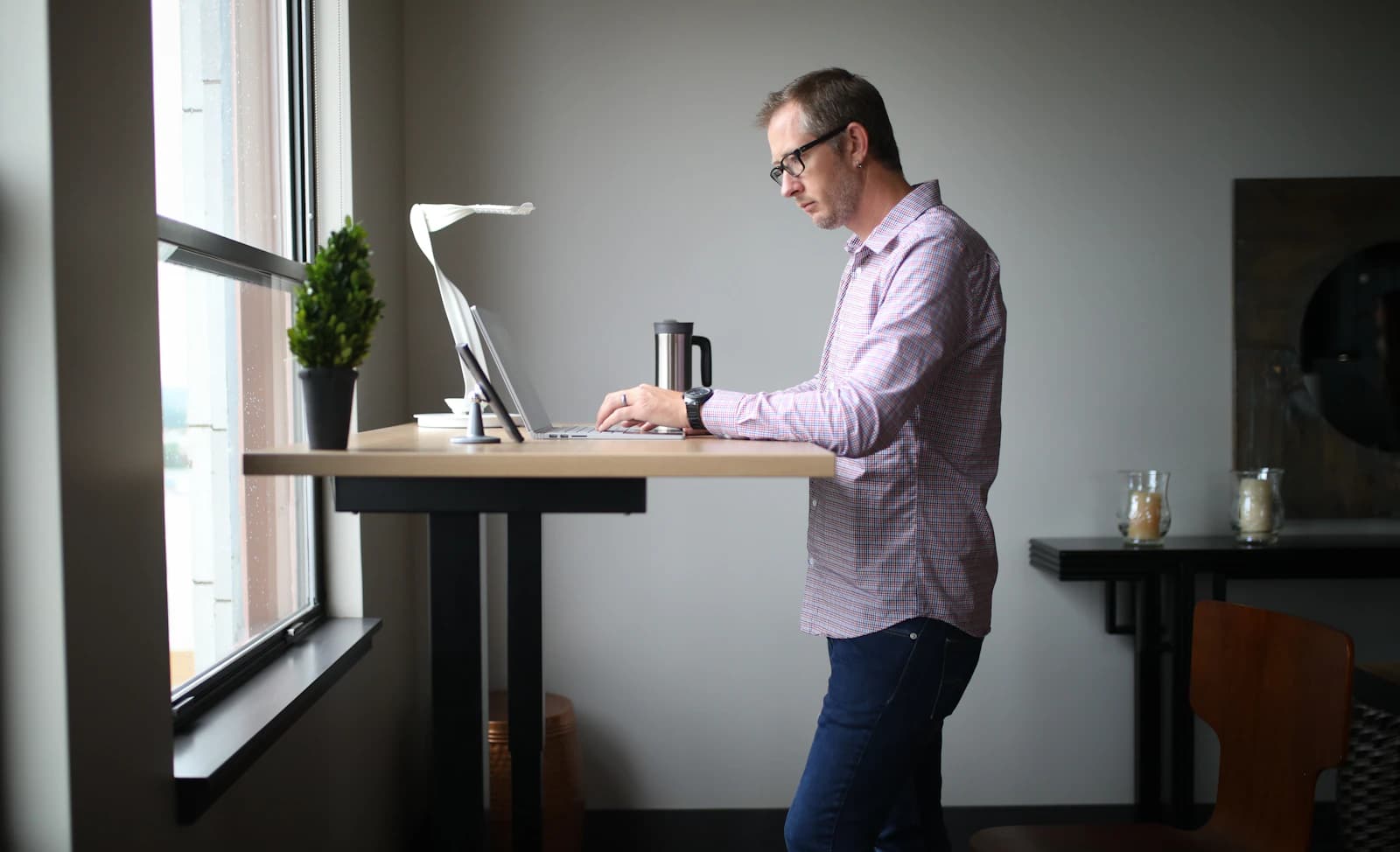
Over the past few years, the height-adjustable desk has become the modern worker's go-to health accessory. It's routinely sold as the cure for back pain, that quiet companion of office life that most adults experience at least once. The pitch is seductive: if sitting wrecks your back, then standing should fix it. But the science tells a slightly different — and more useful — story.
Why sitting eventually starts to hurt
The problem isn't so much sitting itself as how long and how still you do it. An office worker spends roughly two-thirds of the day seated. Holding a fixed posture for long stretches changes the mechanics of the lower back: the pelvis tilts backward, the lumbar curve flattens, and pressure on the intervertebral discs rises. The deep muscles, meanwhile, stiffen and fatigue even under very low contraction.
More telling still: it's not just how much you move, but how. A landmark study published in the journal Work compared, during prolonged sitting, people who go on to develop low back pain with people who stay pain-free. Its conclusion, available on PubMed, is clear: those who end up in pain show different patterns of micro-movement. In other words, a healthy back doesn't stay frozen — it constantly readjusts, through tiny, almost invisible shifts. That's exactly the mechanism we lose when glued to a screen, a phenomenon we've explored through the lens of sedentary behavior.
The standing desk: real cure or overblown promise?
Here's the uncomfortable question. The benchmark review comes from the Cochrane collaboration, which scrutinized 34 studies covering nearly 3,400 office employees. The verdict comes in two parts, and both deserve to be read. First: sit-stand desks do what they mechanically promise. Users sit, on average, between 84 and 116 minutes less per working day.
Second, more troubling: there's no proof this repairs the harms of a sedentary lifestyle. As the Cochrane statement puts it, the quality of the available evidence is very low — studies too small, poorly designed — and the real health benefits remain "unproven." Some good news, though: standing more didn't cause harm either (no muscle pain, varicose veins, or drop in productivity). The standing desk is therefore neither a miracle cure nor a dangerous fad: it's a tool that cuts sitting time, with no automatic guarantee for your back.
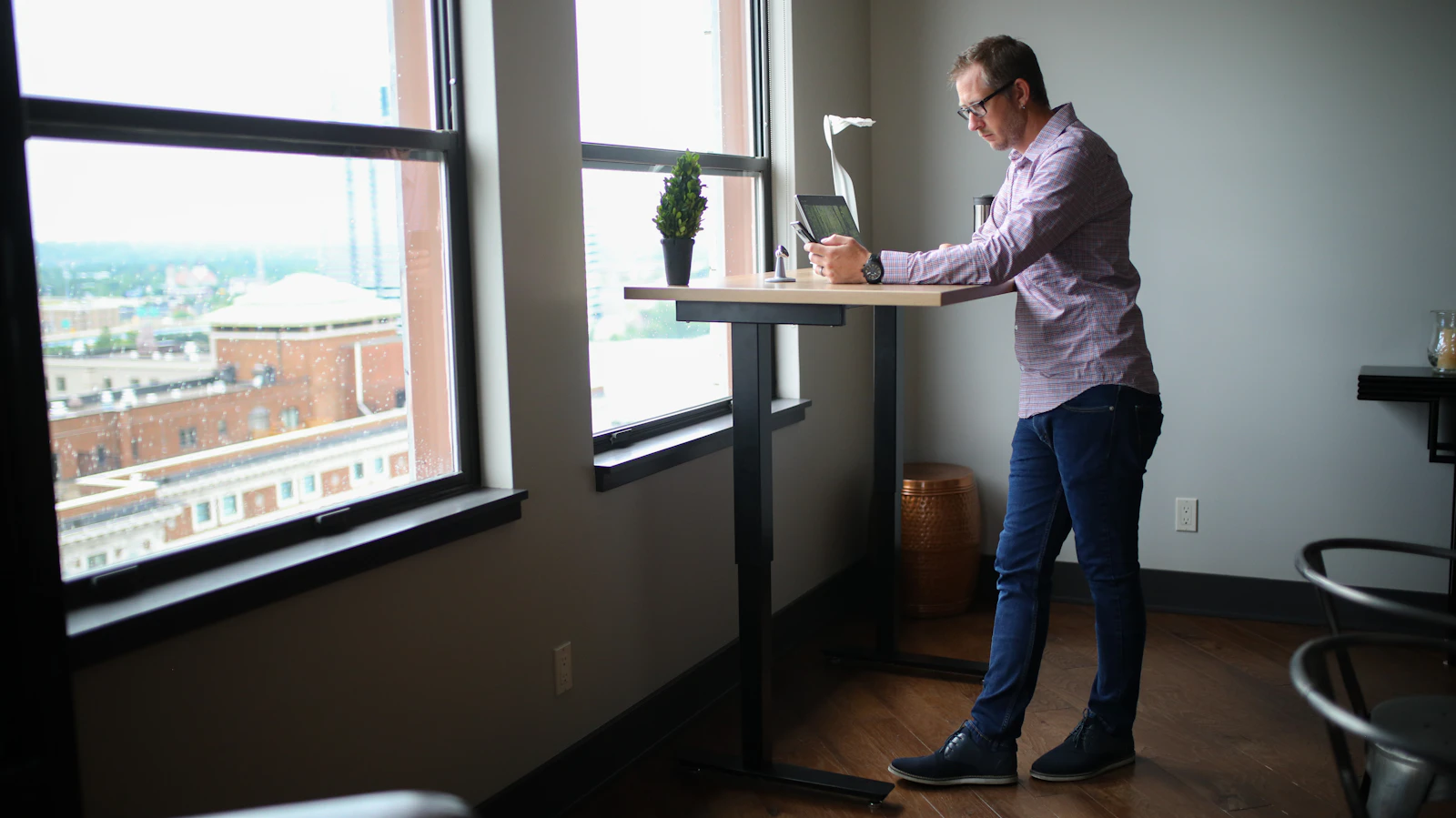
What really matters: movement, not position
If neither "sitting" nor "standing" settles the question, what does? The answer takes shape in a scoping review published in 2025 in the Journal of Back and Musculoskeletal Rehabilitation. Its authors pooled 22 studies — 7,814 participants — to untangle three things often conflated: time spent sitting, posture, and behavior (how you move and break up your positions).
The result, detailed in the PubMed abstract, is illuminating. Of the thirteen studies examining sitting behavior, twelve found a link with back pain — a far stronger signal than for posture alone (seven of ten studies) or sitting time on its own (eight of thirteen). Plainly put: how you alternate, shift your weight and interrupt your positions matters more than the theoretically "correct" posture held for hours. The best posture, as the physiotherapists' adage goes, is the next one.
This reconciles everything. The standing desk helps — not because standing is magic, but because it gives you a reason to change position during the day. The benefit doesn't come from being vertical: it comes from breaking the stillness.
In practice: vary, break up, strengthen
From this follow some simple rules, far sturdier than "buy a standing desk." The Canadian Centre for Occupational Health and Safety recommends changing position regularly rather than hunting for the perfect posture. Concretely:
- Alternate sitting and standing through the day, without chasing an ideal ratio: what matters is the transition, not the target.
- Break up long sitting bouts with short active interruptions — stand up, walk a few steps, stretch. These pauses echo what we said about micro-breaks at work, good for the body and for attention alike.
- Move before it hurts, not once stiffness has set in. It's the frequency of changes that protects, not their intensity.
- Strengthen your core. A back supported by solid muscle copes better with sitting — one more reason to look at the benefits of strength training.
And while you're setting up your workstation, take care of your eyes too: screen height and distance affect the neck as much as digital eye strain — two nuisances that often travel together.

Observe what works for you
One real difficulty remains: back pain is fickle. It depends on sleep, stress, activity level, workload — not just your chair. A good week can be wrongly credited to the new standing desk when it actually came from better nights, and vice versa. Without a reference point, you jump to conclusions.
That's where patiently observing your own habits earns its keep. Rather than guess, you can log what you change — standing time, breaks, physical activity — and cross-reference it with how you feel over several weeks, the approach we detail in our guide to quantified self. That is exactly what Kantise's correlations make visible: not a universal truth, but the coherence between your habits and how your body actually responds.
Kantise is a tool for observing your habits, not a medical device. In case of persistent, severe low back pain, or pain accompanied by neurological signs, consult a health professional.
FAQ
Does a standing desk cure back pain?
Not on its own. The Cochrane review shows sit-stand desks do reduce sitting time (84 to 116 minutes less per day), but their real health benefits remain unproven for lack of high-quality studies. A standing desk helps mainly because it prompts you to change position — it's movement, not being vertical, that protects the back.
Is it better to work sitting or standing?
Neither one exclusively. The science suggests alternating matters more than the position itself. Standing for hours can tire you as much as sitting. The ideal is to vary regularly and to break up long positions with short bursts of movement.
How often should I change position?
There's no magic number, but workplace-health bodies recommend moving often rather than rarely and for long stretches. Standing up and taking a few steps every half hour to hour or so is a good guide. The key is frequency: small regular breaks beat one long pause.
Is there a "perfect" sitting posture?
The 2025 review of 7,814 participants shows that behavior (how you move and alternate) is more linked to back pain than posture alone. A comfortable, supported posture still helps, but holding it frozen for hours is a bad idea. The "best" posture is often the next one: the one you're moving toward.
How can I tell whether my changes really ease my back?
Hard to judge by feel alone, because back pain also depends on sleep, stress, and activity. The most honest way to decide is to observe over time: log your position changes, breaks, and activity, then cross-reference them with how you feel over several weeks, as Kantise's correlations allow.